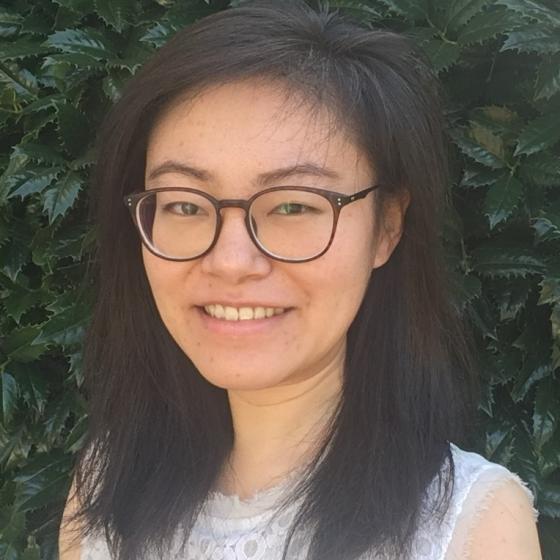
Nicholas L. Abbott Tisch University Professor Smith School of Chemical and Biomolecular Engineering 360 Olin Hall 607/255-3601nla34@cornell.edu
Christopher A. Alabi Associate Professor Smith School of Chemical and Biomolecular Engineering 356A Olin Hall 607/255-7889 Director of Graduate Studies caa238@cornell.edu
Lynden A. Archer Joseph Silbert Dean of Engineering ; James A. Friend Family Distinguished Professor in Engineering Smith School of Chemical and Biomolecular Engineering 348 Olin Hall 607/254-8825engineering_dean@cornell.edu
Brian Bauer Professor of Practice R.F. Smith School of Chemical and Biomolecular Engineering 244A Olin Hall btb42@cornell.edu
William Cleary Professor of Practice Smith School of Chemical and Biomolecular Engineering 168 Olin Hall wjc42@cornell.edu
Susan Daniel Fred H. Rhodes Professor of Chemical Engineering Smith School of Chemical and Biomolecular Engineering 124 Olin Hall 607/255-4675 William C. Hooey Director of Chemical & Biomolecular Engineering sd386@cornell.edu
Matthew DeLisa William L. Lewis Professor Smith School of Chemical and Biomolecular Engineering 250A Olin Hall 607/254-8560 Director of the Institute of Biotechnology Institute of Biotechnology 130 Biotechnology Building matthew.delisa@cornell.edu
T. Michael Duncan Raymond G. Thorpe Teaching Professor of Chemical and Biomolecular Engineering Smith School of Chemical and Biomolecular Engineering 352 Olin Hall 607/255-8715 Director of Undergraduate Studies t.m.duncan@cornell.edu
James R. Engstrom Professor Smith School of Chemical and Biomolecular Engineering 354 Olin Hall 607/255-9934jre7@cornell.edu
Fernando Escobedo Samuel W. and Diane M. Bodman Professor in Chemical and Biomolecular Engineering Smith School of Chemical and Biomolecular Engineering 344 Olin Hall 607/255-8243fe13@cornell.edu
Allison Godwin Dr. G. Stephen Irwin ’67, ’68 Professor of Engineering Education Research Smith School of Chemical and Biomolecular Engineering 246A Olin Hall, Ithaca, NY 14853 afg64@cornell.edu
Jillian Goldfarb Associate Professor Robert Frederick Smith School of Chemical and Biomolecular Engineering 254A Olin Hall jlg459@cornell.edu
Tobias Hanrath Marjorie L. Hart ’50 Professor in Engineering Smith School of Chemical and Biomolecular Engineering 350 Olin Hall tobias.hanrath@cornell.edu
Sarah Hormozi Associate Professor Smith School of Chemical and Biomolecular Engineering 252A Olin Hall 607-255-7804hormozi@cornell.edu
Yong L. Joo BP Amoco/H. Laurance Fuller Professor Smith School of Chemical and Biomolecular Engineering 340 Olin Hall 607/255-8591ylj2@cornell.edu
Vibha Kalra Fred H. Rhodes Professor of Chemical Engineering Smith School of Chemical and Biomolecular Engineering 256 Olin Hall 607/255-8136vk69@cornell.edu
Donald L. Koch Professor Smith School of Chemical and Biomolecular Engineering 167C Olin Hall 607/255-3484dlk15@cornell.edu
Sijin Li Assistant Professor Smith School of Chemical and Biomolecular Engineering 250 Olin Hall 607/255-7713sijin.li@cornell.edu
Matthew J. Paszek Associate Professor Smith School of Chemical and Biomolecular Engineering 358 Olin Hall 607/255-6277 Director of Postdoctoral Studies paszek@cornell.edu
David A. Putnam Associate Dean for Innovation and Entrepreneurship College of Engineering Samuel B. Eckert Professor in Engineering Meinig School of Biomedical Engineering / Smith School of Chemical and Biomolecular Engineering Weill Hall, Room 147 607/255-4352dap43@cornell.edu
Abraham D. Stroock Gordon L. Dibble '50 Professor Smith School of Chemical and Biomolecular Engineering 167A Olin Hall 607/255-4276 College of Engineering abe.stroock@cornell.edu
Jefferson W. Tester David Croll Sesquicentennial Fellow and Professor Smith School of Chemical and Biomolecular Engineering 254 Olin Hall 607/254-7211jwt54@cornell.edu
Jeffrey D. Varner Associate Director Smith School of Chemical and Biomolecular Engineering 256A Olin Hall 607/255-4258jdv27@cornell.edu
Alex Woltornist Professor of Practice Smith School of Chemical and Biomolecular Engineering 244 Olin Hall Director of Masters of Engineering Program aw499@cornell.edu
Rong Yang Assistant Professor Smith School of Chemical and Biomolecular Engineering 252 Olin Hall ryang@cornell.edu
Fengqi You Roxanne E. and Michael J. Zak Professor in Energy Systems Engineering Smith School of Chemical and Biomolecular Engineering 348 Olin Hall 607/255-1162fengqi.you@cornell.edu
Qiuming Yu Professor Smith School of Chemical and Biomolecular Engineering 356 Olin Hall 607-255-7856qy10@cornell.edu
Shuwen Yue Assistant Professor Smith School of Chemical and Biomolecular Engineering 348A Olin Hall 607/255-0848shuwen.yue@cornell.edu